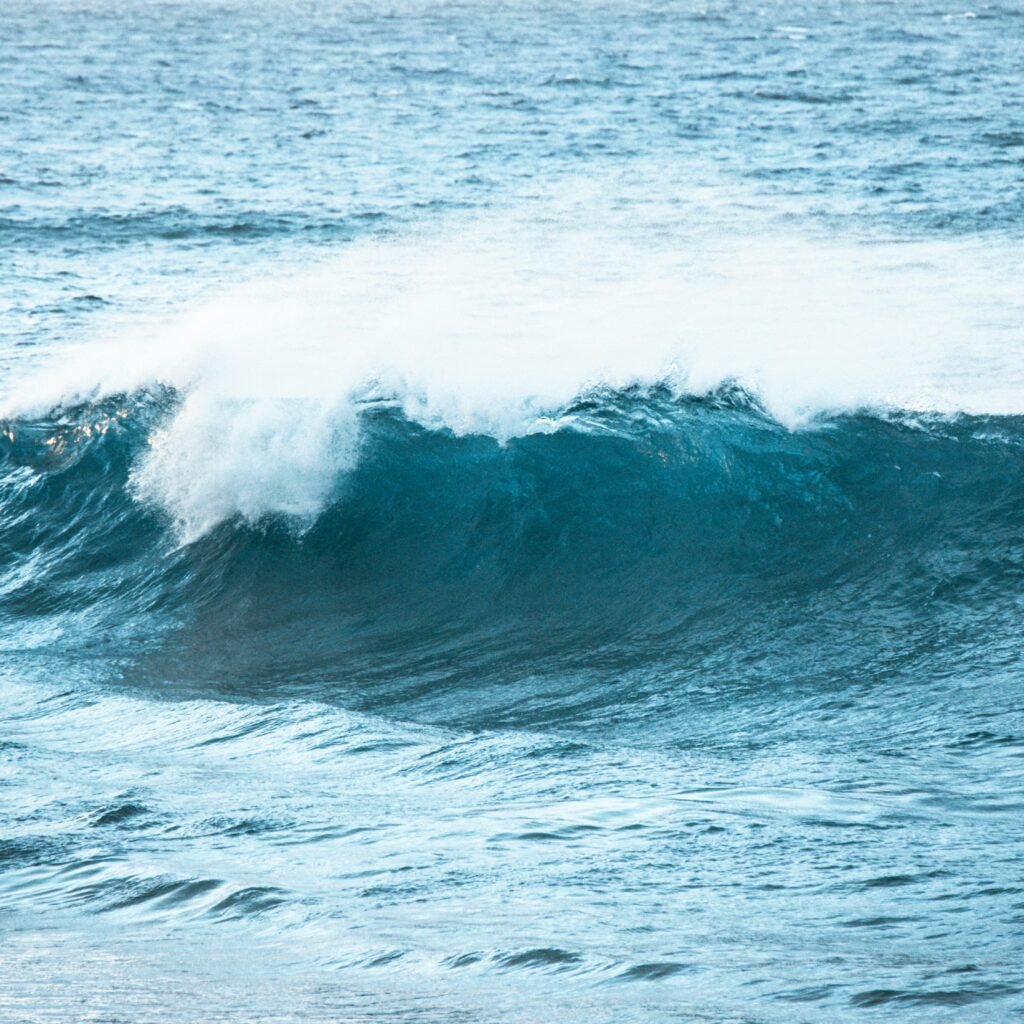
The ocean. A vast, seemingly boundless expanse of water. We’ve all been mesmerized by the rhythmic crash of ocean waves, the ebb and flow that shapes our coastlines and impacts our climate. But beneath the surface of this natural wonder lies a complex world governed by mathematical principles, a world that scientists are only beginning to fully understand. While ocean waves can appear random and unpredictable, a team of Italian mathematicians has made significant strides in deciphering the underlying math, paving the way for better forecasting and a deeper appreciation of our oceans.
In this article, we’ll dive into the fascinating, and often challenging, mathematics behind ocean waves. We’ll explore the fundamental equations, discuss the recent breakthroughs, and examine the practical applications of this knowledge. Prepare to be amazed by the hidden order within the seemingly chaotic world of ocean waves!
The Fundamental Equations of Ocean Waves
Understanding ocean waves starts with understanding the basic physics that govern their motion. These aren’t simple equations; they involve concepts like fluid dynamics, gravity, and surface tension. Let’s break down some key concepts:
Linear Wave Theory (Airy Wave Theory)
This is the simplest model, assuming small wave amplitudes and neglecting non-linear effects. It provides a good approximation for waves in deep water, far from shore. The key parameters here are:
- Wave Height (H): The vertical distance between the crest and the trough of the wave.
- Wavelength (λ): The distance between two successive crests (or troughs).
- Wave Period (T): The time it takes for two successive crests to pass a fixed point.
- Wave Speed (C): The speed at which the wave propagates, related to wavelength and period by the equation C = λ/T.
The linear wave theory gives us a relationship between these parameters and the water depth (h). It allows us to calculate wave speed, wavelength, and other properties based on the water depth and wave period.
Beyond Linearity: The Challenges of Real-World Waves
The linear wave theory is a useful starting point, but it has limitations. Real-world ocean waves are often much more complex. They can be steep, break, and interact with each other in non-linear ways. This is where things get much more challenging mathematically.
Non-linear wave theories attempt to account for these effects. Examples include:
- Stokes’ Wave Theory: An extension of linear theory that includes higher-order terms to account for wave steepness.
- Cnoidal Wave Theory: Used for shallow water waves, where the wave shape becomes more peaked.
- Boussinesq Equations: A set of equations that describe wave propagation in shallow water, accounting for both frequency dispersion (different waves travel at different speeds) and non-linear effects.
These theories are more accurate than linear wave theory, but they are also more complex and difficult to solve. In many cases, numerical methods are required to simulate wave behavior.
The Italian Mathematicians’ Breakthrough
Now, let’s talk about the recent advances made by the team of Italian mathematicians. The exact details of their work are highly technical, but the core of their breakthrough lies in developing new mathematical techniques to analyze and solve the equations that govern ocean waves. They’ve focused on:
Improving the Accuracy of Wave Prediction Models
One of the key goals of wave research is to develop accurate wave prediction models. These models are used for a variety of applications, including:
- Coastal engineering: Designing coastal structures that can withstand wave forces.
- Navigation: Predicting wave conditions to ensure safe navigation for ships.
- Weather forecasting: Ocean waves play a role in weather patterns, so accurate wave prediction can improve weather forecasts.
- Renewable energy: Designing wave energy converters that can harness the power of ocean waves.
The Italian team’s work has led to improvements in the accuracy of these models, particularly in predicting extreme wave events, such as rogue waves.
Understanding Rogue Waves
Rogue waves, also known as freak waves, are unusually large and unexpected waves that can pose a significant threat to ships and offshore structures. These waves can appear seemingly out of nowhere and can be much larger than the surrounding waves.
One of the major challenges in understanding rogue waves is their rarity and unpredictability. However, the Italian mathematicians’ research has shed light on the mechanisms that can lead to the formation of rogue waves. Their work suggests that non-linear interactions between waves can sometimes lead to the focusing of energy, resulting in the formation of these extreme waves.
Understanding and predicting rogue waves is crucial for improving maritime safety. The team’s research is helping to develop better warning systems and design safer ships and offshore structures. Learn more about implementing predictive analytics for safety, check out our comprehensive guide.
Tools and Techniques Used in Research
The study of ocean waves requires a combination of theoretical analysis, numerical simulations, and experimental observations. Here are some of the key tools and techniques used by researchers:
- Numerical Models: Sophisticated computer models are used to simulate wave propagation and interactions. These models solve the governing equations of fluid dynamics using numerical methods.
- Wave Tanks: These are controlled laboratory environments where researchers can generate and study waves under controlled conditions.
- Field Measurements: Instruments such as wave buoys and radar systems are used to measure wave properties in the open ocean.
- Data Analysis: Statistical techniques and signal processing methods are used to analyze wave data and identify patterns and trends.
Practical Applications and Real-World Impact
The research on ocean waves has a wide range of practical applications, impacting various industries and aspects of our lives.
Coastal Protection and Engineering
Understanding wave behavior is crucial for designing effective coastal protection measures. Coastal erosion is a major problem in many parts of the world, threatening infrastructure and ecosystems. By accurately predicting wave forces, engineers can design seawalls, breakwaters, and other structures that can protect coastlines from erosion.
These structures work by dissipating wave energy, reducing the impact of waves on the shoreline. Accurate wave models are essential for optimizing the design of these structures and ensuring their effectiveness. As we covered in our previous article on digital transformation, technology plays a key role in coastal engineering.
Renewable Energy: Harnessing Wave Power
Ocean waves represent a vast and untapped source of renewable energy. Wave energy converters (WECs) are devices that can convert the energy of ocean waves into electricity. Various types of WECs have been developed, each with its own advantages and disadvantages.
The efficiency of WECs depends on the wave climate at the deployment site. Accurate wave prediction is essential for assessing the potential of wave energy resources and optimizing the design of WECs. Advances in wave modeling are helping to make wave energy a more viable and cost-effective source of renewable energy.
Maritime Safety and Navigation
Accurate wave forecasts are essential for ensuring the safety of ships and offshore structures. Ships need to be able to navigate safely in rough seas, and offshore platforms need to be designed to withstand extreme wave forces. Wave forecasts are used to plan shipping routes, schedule offshore operations, and issue warnings about hazardous sea conditions.
The ability to predict rogue waves is particularly important for maritime safety. Early warning systems can provide ships with enough time to take evasive action and avoid potentially catastrophic encounters with these extreme waves.
The Future of Wave Research
The study of ocean waves is an ongoing field of research, with many unanswered questions and exciting new directions. Here are some of the key areas where future research is likely to focus:
Improving Wave Prediction Models
Despite recent advances, there is still room for improvement in wave prediction models. Researchers are working to develop more accurate and efficient models that can capture the complex dynamics of ocean waves. This includes incorporating more detailed physics, such as the effects of air-sea interaction and wave breaking.
Understanding Wave-Climate Change
Climate change is expected to have a significant impact on ocean waves. Changes in wind patterns and sea levels could alter wave climates, leading to changes in wave height, period, and direction. Understanding these changes is crucial for adapting to the impacts of climate change and managing coastal resources effectively.
Developing New Wave Energy Technologies
Wave energy has the potential to become a major source of renewable energy, but further research is needed to develop more efficient and cost-effective WECs. This includes exploring new designs, materials, and control strategies. For more insights on renewable energy technologies, see our detailed analysis.
Conclusion
The mathematics of ocean waves is a complex and fascinating field, with implications for a wide range of applications. From coastal protection to renewable energy to maritime safety, understanding wave behavior is essential for managing our oceans and mitigating the risks posed by these powerful forces of nature. The recent breakthroughs by the Italian mathematicians highlight the importance of continued research in this field.
We hope this article has provided you with a deeper appreciation of the hidden math behind ocean waves. If you found this interesting, share it with your friends and colleagues! And if you’re interested in learning more about related topics like fluid dynamics or climate change, be sure to check out our other articles.